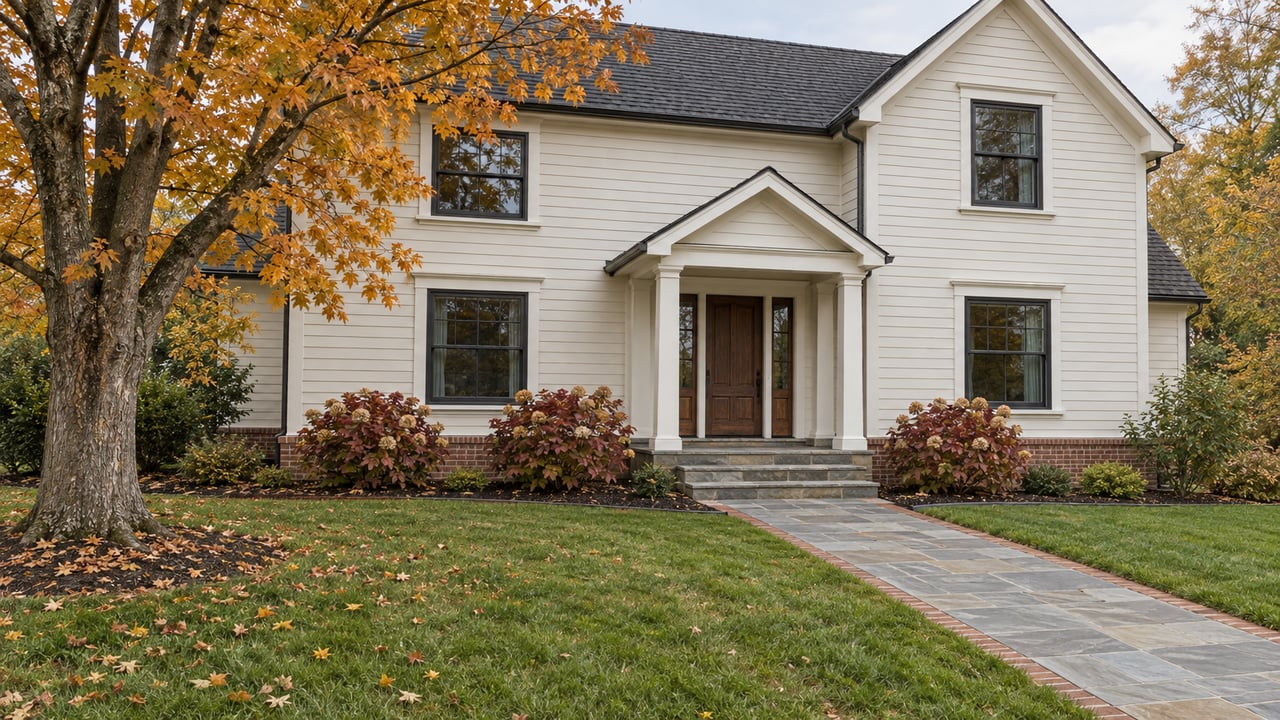
Haworth Will Reprice Every Home as of October 2027. The Sales Closing Now Are the Evidence.
November 5, 2026
November 5, 2026
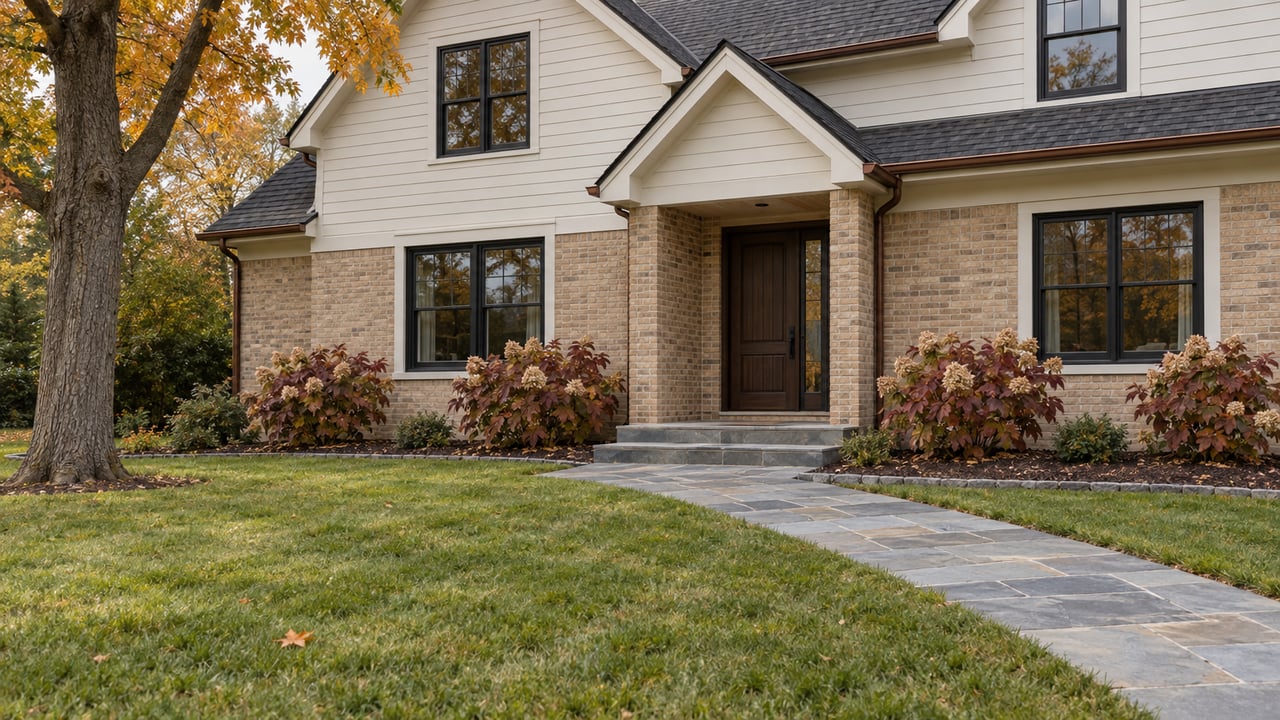
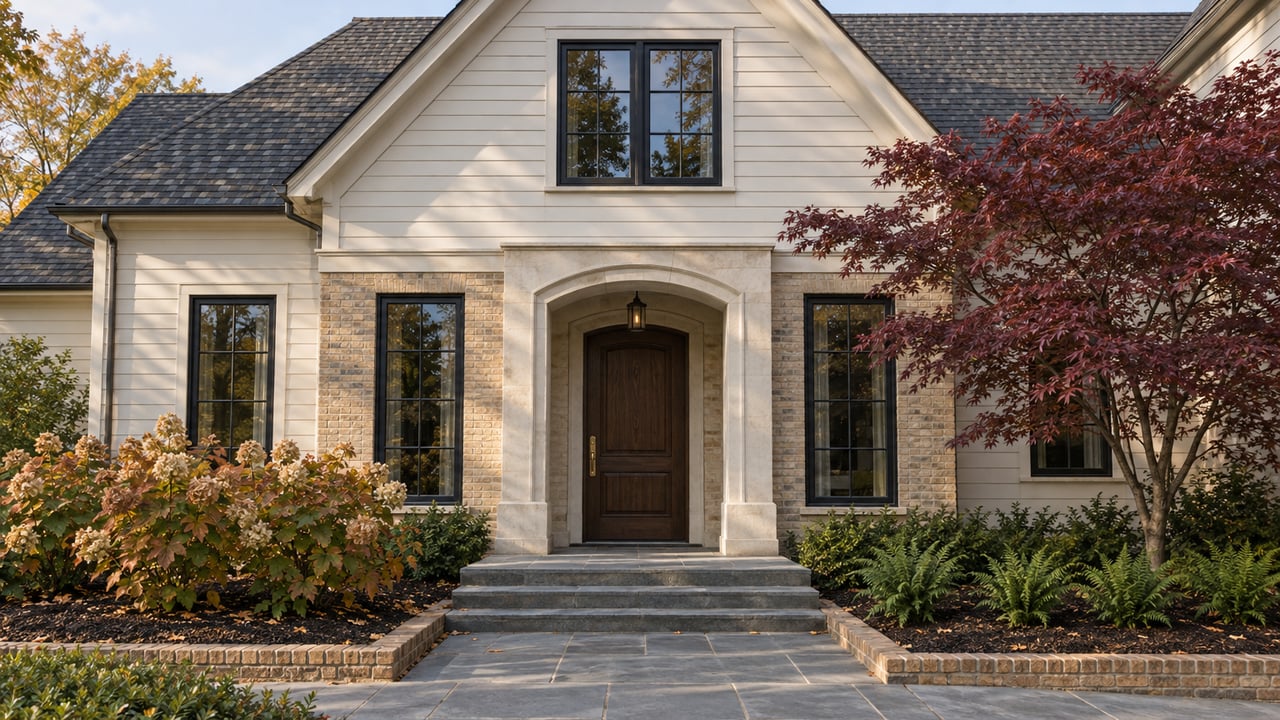
On October 12, 2026, a new six-bedroom house at 302 Pine Street in Haworth sold for $3.1 million. Lumaj Properties built it with more than 6,000 square feet of living space, a heated Gunite pool and a finished lower level with a movie theater. The property's public tax history tells a different story. In 2025 the parcel was assessed at $255,000 and carried a $15,838 tax bill. A year earlier, when a ranch house still stood there, it was assessed at $553,600, split between $317,500 of land and $236,100 of improvements.
Neither assessment reflects the house that now stands on the lot, or the tax bill its next owner will carry. That gap is wider in Haworth right now than at almost any point in the past two decades, and it has a scheduled end date.
The Bergen County Board of Taxation has directed Haworth to revalue all real property in the borough. The valuation date is October 1, 2027, and the new values take effect for the 2028 tax year. Resolution 2026-197, on the borough council's October 27, 2026 agenda, awards the work to Realty Data Systems LLC of Lincroft for no more than $159,000.
Getting to that contract took several rounds. The borough's first request for proposals drew no responses. A second drew one proposal, from Appraisal Systems, Inc. at $171,930, which the council rejected in 2025 as inconsistent with its budget. The council then authorized the tax assessor and borough administrator to negotiate directly with firms, and the negotiated price falls within the $165,000 special emergency appropriation authorized by Ordinance 2026-19. The county had already put Haworth on its schedule of 2027 revaluations and reassessments, dated January 7, 2026.
So the timing does not depend on any one council vote. Every Haworth property will get a new assessment based on what it would sell for on October 1, 2027.
New Jersey publishes a Director's Ratio for every municipality. It estimates how assessed values compare with true market value, based on sales. Haworth's ratio has fallen fast.
| Year | Haworth Director's Ratio |
|---|---|
| 2004 | 99.81% |
| 2020 | 85.98% |
| 2022 | 79.26% |
| 2023 | 74.13% |
| 2024 | 67.80% |
| 2025 | 62.09% |
| 2026 | 55.60% |
The ratio last sat near 100% in 2004, according to the state's Director's Ratio table. Over four years it dropped almost 24 points. The state's assessor handbook says a ratio of 85% or less may indicate noncompliance. It also says a steady decline from the 100% level can signal inadequate assessment maintenance and the need for a reassessment or revaluation.
Haworth's 2026 average residential assessment is $671,453, according to the state's 2026 residential statistics. Divide that by the 55.60% ratio and you get roughly $1.21 million. Redfin's all-home median sale price for Haworth over the three months ending September 2026 was $1,249,405. The two figures line up. A typical Haworth home is assessed at a little more than half of what it trades for.
Taxes are still billed on those assessments. The borough's 2025 general tax rate was 3.225 per $100 of assessed value, and the average 2025 residential bill was $21,262, according to the state's 2025 tax rate table and 2025 residential statistics. A low assessment paired with a high rate does not mean any one household is under-taxed. The arithmetic works the same for every property in town. What changes in a revaluation is how the total is shared.
People reading about a revaluation often assume their taxes will rise. The handbook takes that assumption on directly:
"Although revaluation often results in increases to every individual assessment, it does not mean that all property taxes will increase. Assessments are the base used to apportion the tax burden."
The handbook's example uses a municipality that needs to raise $15 million from property taxes, spread across $600 million of total assessments. That works out to $2.50 per $100. If every assessment roughly doubles, the rate falls by about half. The amount the borough has to raise is decided in the budget. The revaluation decides each property's share of it.
Once every assessment is reset to the same footing, a property's share of the levy can move in either direction. Where it lands depends on how that property's value compares with the rest of the borough on October 1, 2027. That is why 2028 bills cannot be predicted from 2026 ones. They will be built from evidence that is still coming in.
A revaluation firm sets values from market data, and the market data in a borough of Haworth's size is thin. Over the three months ending September 2026, Redfin counted five closed sales in Haworth, with a median of 82 days on market. September's sale-to-list ratio was 100.9%. Only four of those sales were single-family homes, and they had a median price of $1,182,029.
Three recent closings show how wide the range runs:
The Pine Street site shows how quickly the gap can open. When the original ranch was listed in 2022, it was marketed as an as-is house that buyers could renovate or replace, on a 125-by-216-foot lot in the Manor section with a possible two-lot subdivision. The new house sits on 0.31 acres. Its most recent public assessment reflects a building site. Its sale price reflects a finished luxury home. Sales like this one, and the more modest resales around them, are what the revaluation firm will have to reconcile by October 2027. Each closing between now and then adds to the record.
A buyer working out monthly costs on a Haworth home starts with the tax bill on the listing. Over the next eleven months that bill will be the least durable number in the file. It comes from a base the county has ordered replaced, and the replacement depends on the very sales the buyer is using as comps.
That gives the seller something to plan for. Experienced buyers and their attorneys will ask what the 2028 bill might look like. A seller who can explain the timeline, cite the ratio and point to the state's own explanation of apportionment will handle that conversation better than one who only has the current bill. The questions tend to come up at the offer stage, when a buyer is pricing in risk, so it pays to have the answer ready before listing.
The calendar to work from:
This post is general information, not legal, tax or financial advice. Owners should confirm how a revaluation affects their own property with a tax attorney, accountant or the borough's tax assessor.
Will my Haworth taxes go up after the revaluation? Not necessarily. The state handbook says a revaluation can raise every individual assessment without raising every tax bill, because assessments only divide the amount the borough has to raise. Each bill will depend on how a property's value on October 1, 2027 compares with the rest of the borough.
Does the October 1, 2027 date mean only a sale on that date counts? No. October 1, 2027 is the valuation date, the day the new assessments are meant to reflect. Values are estimated from market evidence built up over the period before it.
Why is the tax bill on a new-construction listing sometimes so low? A property's recorded assessment can lag what is physically on the lot. At 302 Pine Street, the 2025 assessment of $255,000 came before a finished $3.1 million house was sold in October 2026.
If you're thinking about selling in Haworth before or after the 2027 valuation date, it helps to plan pricing, timing and the tax discussion with buyers together. Stacy Esser Group can walk you through Haworth's recent closings and what they mean for your listing. Schedule a Meeting Today.
Stay up to date on the latest real estate trends.

Housing Market
Stacy Esser, with Chris Sapienza of the Stacy Esser Group

2026 Market Update
A Deeper Dive Into the Stats

With this level of growth, it's no surprise that months of supply are at historic lows.
Housing Market
SEG is a high performing Bergen County luxury real estate team that blends relationship driven service, cutting edge marketing, and strategic negotiation to consistently outperform traditional agents.