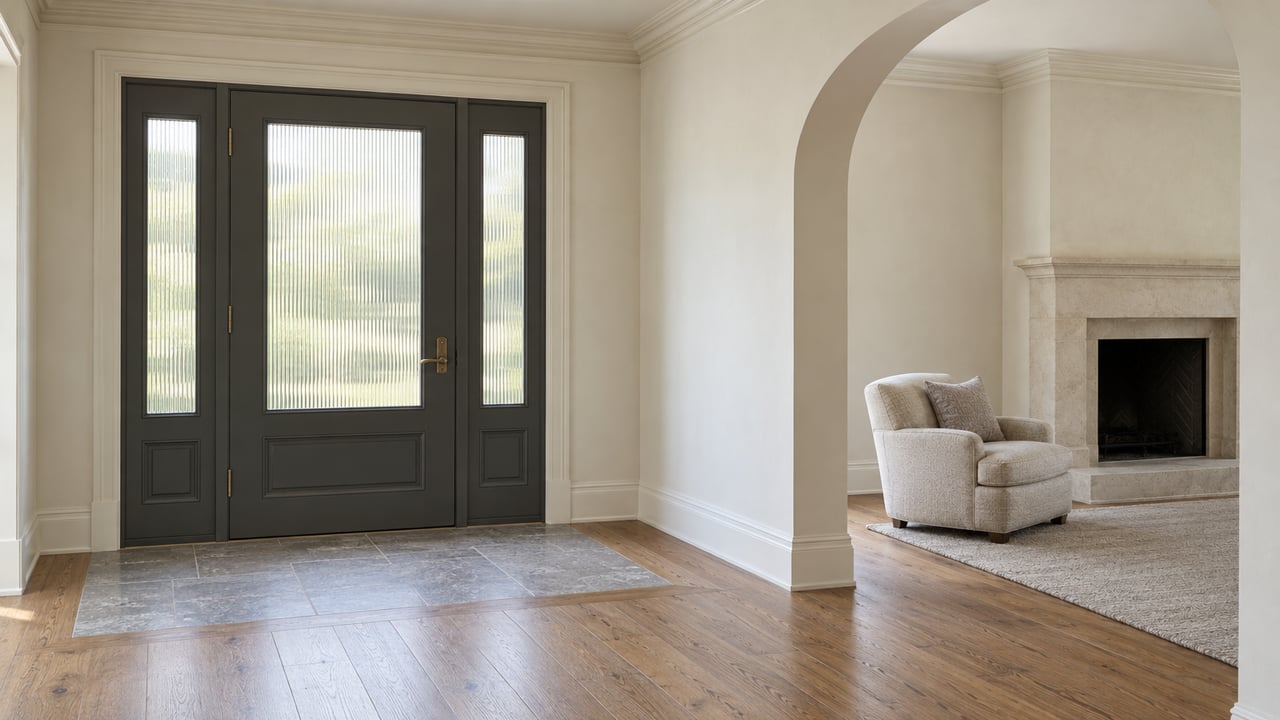
Before an Oradell Closing, the Borough Walks Through the House Too
November 5, 2026
November 5, 2026
Who decides that a cracked asphalt driveway apron in Oradell has to be torn out and poured again in concrete? The buyer doesn't, and neither does the buyer's home inspector. The Borough of Oradell does. Its residential resale application says that asphalt sidewalks and aprons "need to be replaced with concrete," and that a concrete one with a half-inch trip edge has to be replaced or lifted and regraded, because "no patching or grinding is permitted."
That line comes from the Building Department's checklist for the resale certificate, which every Oradell seller has to get before a buyer can move in. Most of the list covers routine safety items. Several items, though, deal with exactly what a listing tends to advertise: the finished basement where someone sleeps, the second stove, the renovation that never got a permit. In Oradell those items get reviewed by the borough before closing, so the time to sort them out is before the house is photographed.
Chapter 85 of the Oradell code says no one may occupy a home for residential purposes after it has been vacated because of a sale until the owner has applied for and secured a certificate of continued occupancy. The text of Chapter 85 puts that duty on the current owner. The application is filed with the borough's Code Enforcement Agency, and depending on what the Construction Official considers necessary, the inspection can involve the Building Inspector, the zoning official, the Health Officer and the Fire Safety Inspector.
The certificate comes from Chapter 85 rather than from the purchase contract, and the code sets out its scope:
"The certificate of continued occupancy shall evidence only that a general inspection of the visible parts of the premises has been made and that it is in compliance with the purposes of this chapter."
Many of the items on the borough's checklist, such as an apron at the curb, a hedge at a corner or a stove in a basement, are in plain view. If the certificate is denied, the borough sends the owner a written notice that lists the reasons. The current application also says a $500 penalty applies for closing before the certificate is issued.
The borough's resale/rental certificate application includes a section titled "Additional Items That May Need to Be Addressed." Some entries are small fixes. The ones below matter because they affect how a house is described, priced or shown.
| Checklist item | What the borough's form says | Where it meets the listing |
|---|---|---|
| Open permits | "A fine shall be issued for any open or unobtained permits for projects that were done on the property." | Every finished basement, deck or kitchen renovation in the listing copy |
| Mechanical equipment | Water heaters, boilers, furnaces, HVAC and central air "shall have an inspection sticker or proof of approval." | A "new furnace" or "updated systems" line in the description |
| Sleeping areas | Attics and basements may not be used as a bedroom or sleeping area without an approved, code-compliant second means of egress. | Bedroom count and the staging of lower levels |
| Cooking appliances | "Only the stove or cooking appliance in the main kitchen area is permitted." | A second kitchen or summer kitchen shown in photos |
| Sidewalks and aprons | Asphalt must be replaced with concrete; trip hazards of a half inch or more must be replaced or regraded, with no patching or grinding. | Curb appeal and the exterior budget |
| Corner landscaping | On corner lots, bushes near the intersection must be trimmed to a maximum of 30 inches. | Privacy plantings on corner properties |
| Pools and hot tubs | Gates must be self-closing and self-latching, swing out, and latch 54 inches above grade. | Backyard photography and outdoor features |
The same section covers sealed flue connections, stove anti-tip brackets where the manufacturer requires them, covered outlets and junction boxes with no exposed wiring, handrails on any stair with four or more risers, and garage door openers running on extension cords. It also says a sump pump may not discharge into a sewer line, a sink or a new curb discharge. The list ends with a catch-all: "Any safety issues that are not listed but found during an inspection."
Every one of these items is on the form that every residential resale application in Oradell goes through.
The smoke and carbon monoxide section of the form is part of the same application, and the standard it applies depends on when the house was built or last altered. Oradell has older housing stock and many renovations, so two houses on the same street can face different requirements:
Under the form, any smoke detector more than ten years old has to be replaced with a ten-year sealed-battery unit, and an electric detector can't be swapped for a battery one. A detector is required within 10 feet of every bedroom door, and a working carbon monoxide alarm is required within 10 feet of each sleeping area. Placement is regulated as well. Detectors can't be within 3 feet of an air vent or the tip of a ceiling fan blade, or within 1 foot of a light fixture. A detector that is in good working order but mounted a foot too close to a fixture can still mean a reinspection. Homes with a monitored smoke system need an NFPA-72 test report from the monitoring company dated no more than 30 days before closing, so that item can only be done once the closing date is close.
New Jersey's alarm rules have changed in recent years. The state's 2019 sealed-battery requirement and P.L. 2025, c.19, which added a warning-label requirement where a secondary power source exists, are both worth reading before the walk-through.
Once the inspection list is long, timing is the next problem. In Bergen County, single-family homes that sold in September 2026 spent a median of 34 days on market and closed at 103.4 percent of list price, according to the New Jersey Realtors September 2026 county report. In a market moving at that pace, a seller who first sees the borough checklist after accepting an offer has to fit concrete work, permit closeouts or egress questions into the remaining weeks before closing.
Oradell's schedule works backward from that date:
The dollar amounts are small next to the sale price of an Oradell home. The real cost of a late application is lost time: a failed item has to be fixed, reinspected and cleared before closing.
The borough form is a useful pre-listing checklist. Comparing it against the house before photographs, before the bedroom count goes into the listing and before a staging plan puts a bed in the basement gives the seller time to fix items and to take any questions to an attorney before the listing goes live. That way the work happens on the seller's schedule. Questions about the application go to the Oradell Building Department at 355 Kinderkamack Road, 201-261-8005, where the form lists Stephen A. Depken as Construction Official. The Fire Prevention Bureau handles fire safety.
This post is general information, not legal or financial advice. Borough requirements and fees can change, so confirm the details for your property with the Building Department and your attorney.
Does the borough inspection replace the buyer's home inspection? No. The certificate covers a general inspection of the visible parts of the home against Chapter 85, and the borough issues it to the owner. A buyer's own home inspection is a separate matter.
Can a seller close before the certificate is issued? The current application says a $500 penalty is assessed for closing before the certificate is issued.
Does the same process apply to a rental? Yes. The same application covers resale and rental, and Chapter 85 adds lead-based paint inspection requirements for rental dwellings at tenant turnover.
At Stacy Esser Group, our Value-Up pre-market plan starts with the borough's own checklist, so permits, aprons, alarms and room labels are settled before the first showing and the closing date isn't set by a reinspection. If you're preparing an Oradell home for sale, schedule a meeting today and we'll walk the house with the borough's form in hand.
Stay up to date on the latest real estate trends.

Housing Market
Stacy Esser, with Chris Sapienza of the Stacy Esser Group

2026 Market Update
A Deeper Dive Into the Stats

With this level of growth, it's no surprise that months of supply are at historic lows.

Housing Market
SEG is a high performing Bergen County luxury real estate team that blends relationship driven service, cutting edge marketing, and strategic negotiation to consistently outperform traditional agents.