In Tenafly, a Higher Offer Can Leave the Seller With Less
October 8, 2026
October 8, 2026
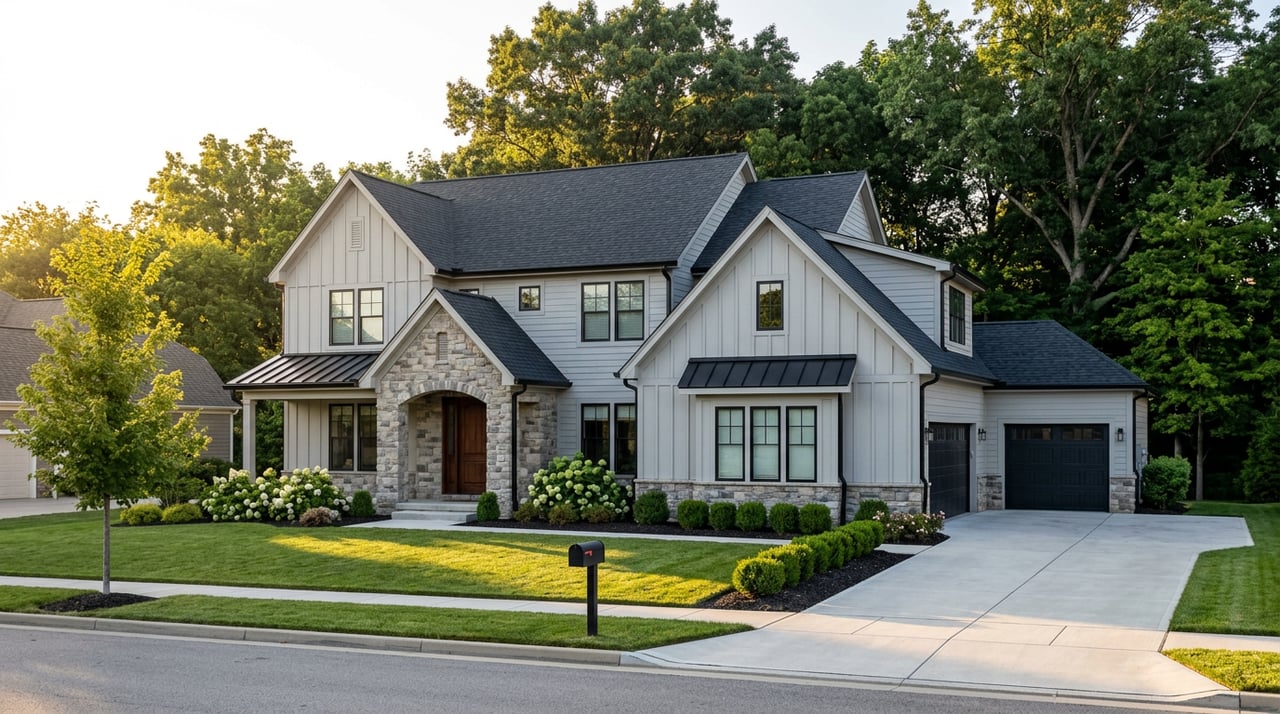
A 2017 house at 89 Depeyster Avenue in Tenafly closed on July 17, 2026, for $3,525,000. That works out to $733 per square foot across 4,812 square feet. The price is $25,000 above $3.5 million, and under New Jersey's current transfer rules that $25,000 moved the whole sale into a higher fee bracket.
At exactly $3,500,000, the state's Graduated Percent Fee would have been 3 percent of the price, or $105,000. At $3,525,000, the rate is 3.5 percent of the full amount, or $123,375. So $18,375 of the extra $25,000 goes to the state, and the seller keeps about $6,625 of it before commission and the ordinary realty transfer fee. In Tenafly's price range, the line between brackets is a number worth planning around.
The fee used to be called the mansion tax. Before mid-2025 it was a flat 1 percent on homes over $1 million, and the buyer paid it. The law signed June 30, 2025, as P.L. 2025, c. 69 replaced that with a graduated structure. Governor Murphy's original budget proposal had kept the buyer paying, at 2 percent over $1 million and 3 percent over $2 million. Lawmakers negotiated a different version. The NJ Division of Taxation states the result plainly:
"The seller is statutorily responsible for the RTF and the Graduated Percent Fee."
The fee applies to deeds recorded on or after July 10, 2025. It comes on top of the regular realty transfer fee. The detail that matters for pricing is how the rate is applied. According to the Division of Taxation's realty transfer page, each rate is a percentage "of total consideration," so it covers the entire price. It is not charged only on the dollars above each threshold. The Division's own example is a $2.75 million sale, which owes 2.5 percent of $2.75 million, or $68,750. A sale at exactly $2 million stays in the 1 percent bracket.
Because the rate applies to the full price, each threshold creates a band just above it where a higher contract price leaves the seller with less money. The table shows the math on the fee alone. Commission and the ordinary transfer fee would make each band a little wider.
| Threshold | Fee at exactly the threshold | Rate just above it | Price needed to net the same as the threshold | Range where the seller nets less |
|---|---|---|---|---|
| $2,000,000 | $20,000 at 1% | 2% | about $2,020,400 | roughly the first $20,400 above |
| $2,500,000 | $50,000 at 2% | 2.5% | about $2,512,800 | roughly the first $12,800 above |
| $3,000,000 | $75,000 at 2.5% | 3% | about $3,015,500 | roughly the first $15,500 above |
| $3,500,000 | $105,000 at 3% | 3.5% | about $3,518,100 | roughly the first $18,100 above |
The $2 million line has the widest band, at about $20,400. That threshold is where much of Tenafly's upper tier trades.
Here are this summer's Tenafly sales between roughly $1.8 million and $4.2 million, drawn from MLS records and NJ.com's weekly Bergen County sales roundups. Each fee figure is the statutory rate times the sale price. It assumes a standard residential classification and no exemption.
Two of these sales landed close to a line, on opposite sides. Magnolia closed just under $2 million and paid the lower rate. Lylewood closed $50,000 above $2.5 million, which is past the roughly $12,800 band in the table. That sale cost about $13,750 more in fee than a $2.5 million closing would have, so the extra $50,000 in price left the seller about $36,250 ahead. Clearing the band is fine. A modest overshoot is where sellers lose money.
Seven closings over one summer don't show how sellers behave. They do show that Tenafly contracts regularly land within shouting distance of all four thresholds. One caution on dates: NJ.com's roundups are organized by the week the deed was recorded, which can come well after the property actually sold.
A seller who lists at $3.6 million doesn't need to think about the $3.5 million line. The band matters for homes listed a little below a threshold that then attract competing offers.
Bergen County single-family homes sold for a median of 104.1 percent of list price in August 2026. Median days on market was 30, and the median sale price was $925,000, up 5.1 percent from a year earlier, according to New Jersey Realtors' public county report. Apply that ratio to a $3.4 million listing and the result is about $3,539,000. That is above the $3.5 million line and inside the band where the seller nets less. The same thing happens at $1.95 million: a 104.1 percent result is about $2,030,000, just past the $2 million band.
Statewide data shows more deals happening at these prices. NJ.com reported on September 23, 2026, that sales from $1 million to $2.5 million were up 11 percent and sales above $2.5 million were up 9 percent, citing the Otteau Group. Purchase contracts overall fell 7 percent in August. The same article reported that New Jersey collected $61 million in realty transfer fees in August 2026, 18 percent more than a year earlier, and that the Graduated Percent Fee is reported separately from that total. More upper-tier sales means more contracts landing near a threshold.
None of this tells a seller to underprice. The threshold is one more input, alongside comparable sales, condition and timing, and it should be decided before the listing goes live, when there is still room to choose. In practice that comes down to a few decisions:
Once offers are in hand, the only choices left are which offer to take and how to answer it. The threshold is much easier to manage while the list price is still being set.
Is the fee being repealed? Not so far. Governor Sherrill signed the FY2027 budget on June 30, 2026, and it kept the fee in place. New Jersey Globe's budget coverage lists $533 million in projected revenue from it. Senate bill S964 would eliminate the mansion and supplemental transfer fees. It was introduced January 13, 2026, and is still listed as introduced. New Jersey Realtors called for relief in March 2026, but that is advocacy, not a change in the law.
An older state FAQ says the buyer pays. Which is right? The Division of Taxation's realty transfer page, updated September 28, 2026, says the seller is responsible. An older Division FAQ still describes the buyer-paid 1 percent fee that existed before the change.
Does a contract signed before July 10, 2025, still matter? Only for older deals. Under the Division's transition rule, sellers on certain sales over $2 million with contracts fully signed before July 10, 2025, could seek a refund of the fee above 1 percent if the deed was recorded on or before November 15, 2025. That recording deadline has passed.
If your Tenafly home is likely to sell near $2 million, $2.5 million, $3 million or $3.5 million, the threshold should be part of the pricing decision from the start. Stacy Esser Group builds net-proceeds comparisons into its pre-market pricing work so that list price, likely over-list results and the bracket line are set together. Schedule a Meeting Today.
Stay up to date on the latest real estate trends.

SEG is a high performing Bergen County luxury real estate team that blends relationship driven service, cutting edge marketing, and strategic negotiation to consistently outperform traditional agents.